At Pickett Family Dental, we help patients understand all available solutions after losing all their teeth so they can choose the option that best fits their comfort, lifestyle, and long-term goals. Many people ask whether dentures are still the best option or if new technologies offer better stability and daily function. Traditional dentures are certainly an option, but they’re no longer the only one—and for many patients, they’re not the most comfortable or dependable choice. This article walks through what dentures can still offer, where they fall short, and what modern alternatives can provide when you’re ready for a more secure solution.
Losing all your teeth can be overwhelming, and choosing a replacement is an important step. Dentures may seem like the default choice because they’ve been used for generations, but advancements in implant dentistry now give you stronger, more natural-feeling alternatives. Understanding the differences will help you make a confident choice about your long-term oral health.
What Dentures Still Offer Patients Today
Traditional dentures remain a common solution because they’re affordable, accessible, and can provide a complete smile quickly. They’re custom-shaped to fit your gums and can restore appearance and basic chewing ability. For patients who need an immediate replacement or want a non-surgical option, dentures are still a practical starting point.
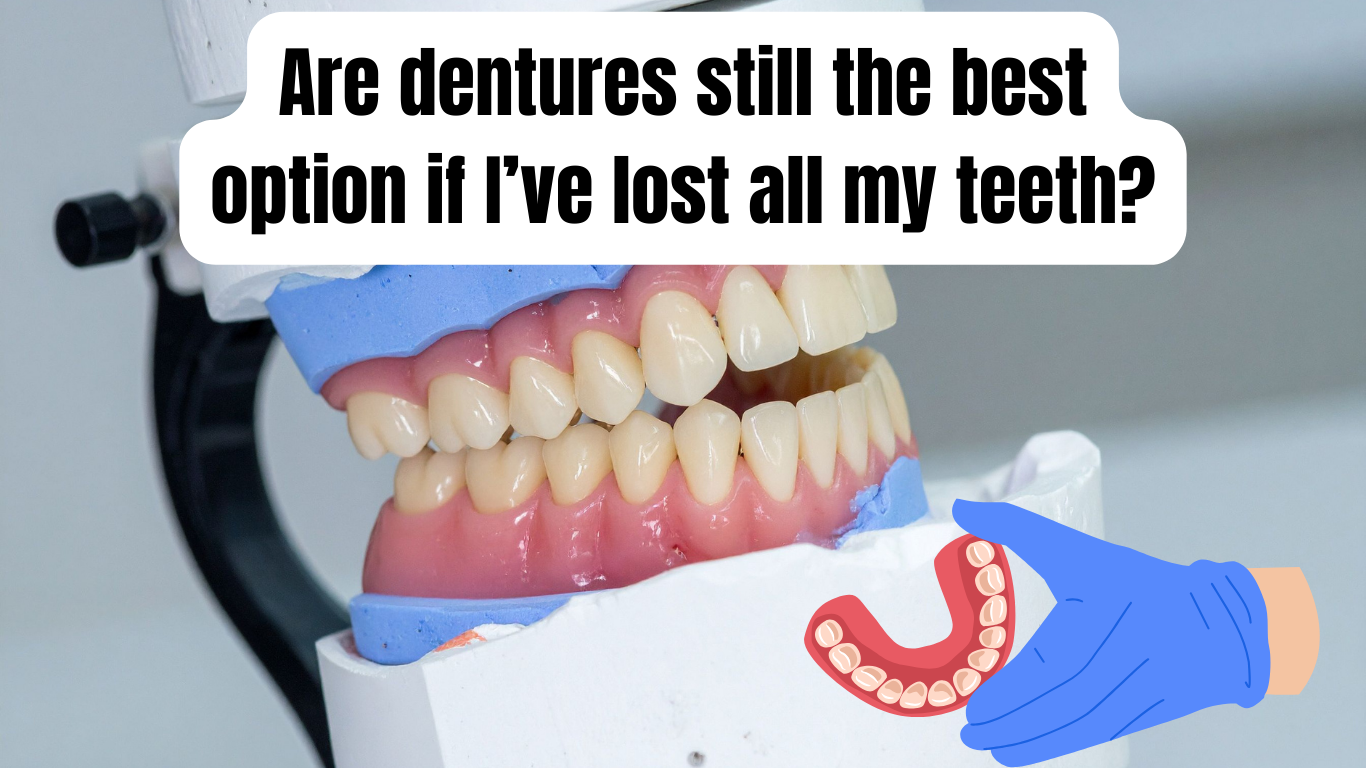
Dentures also continue to improve in design. Modern materials create a lighter, more natural appearance than dentures from years past. Many patients appreciate that dentures don’t require surgery and can be adjusted as needed if the gums change shape over time.
If you’re considering dentures or another tooth replacement option, our general dentistry page offers helpful information about full-mouth solutions and long-term care.
Despite these benefits, dentures do come with limitations that can affect daily comfort and confidence. Knowing these limitations helps you determine whether they truly fit your lifestyle or if another approach may serve you better.
Where Dentures Fall Short for Many Patients
The biggest challenge with dentures is stability. Since they rest on the gums rather than anchoring into the bone, they can shift, rub, or loosen throughout the day. Many patients rely on adhesives or find themselves adjusting their dentures during meals or conversations.
Another common concern is bite strength. Dentures provide only a portion of your natural chewing power, which limits the types of foods you can enjoy. Over time, bone shrinkage also occurs because dentures don’t stimulate the jawbone the way natural roots do. This can change the shape of your face and require repeated adjustments.
Speech can also be affected, especially with upper dentures that cover the palate. Even well-fitting dentures may require a learning period before your speech sounds natural again.
These challenges are why many patients ask about more stable and long-lasting options. To explore alternatives, our dental implants page explains how implants provide support that dentures alone cannot.
For trusted, medically reviewed guidance on tooth replacement, the American Dental Association offers detailed explanations of both dentures and implant-supported solutions.
How Implant Solutions Compare to Dentures
Modern implant systems—such as individual implants or full-arch options—give you a secure foundation that helps you chew, talk, and smile with confidence. Instead of resting on top of the gums, implants bond with the bone, creating stability that feels closer to natural teeth.
For patients missing all their teeth, implant-supported dentures or full-arch solutions are especially appealing. They snap or screw into place, eliminating slipping and allowing greater chewing strength. Many patients say the difference is night and day, especially when enjoying firm foods or speaking in social settings.
Implant options also help prevent bone loss by stimulating the jaw, which keeps your facial structure more supported over time. While implants involve a higher initial investment, they often save patients years of adjustments, adhesives, and frustration.
If cost is a concern, we offer clear explanations and flexible support on our payment options page so you can plan confidently.
What Patients Care About Most When Choosing Between Dentures and Implants
Patients often want to know which option feels the most natural day to day. Implants typically provide a more predictable and comfortable experience because they remain secure during eating and speaking. Dentures can look natural, but they won’t match the stability implants offer.
Many people also wonder about comfort. Implant-supported solutions prevent the rubbing and sore spots that dentures sometimes cause because they stay firmly in place. This stability can make a dramatic difference, especially for long-term wear.
Another major concern is maintenance. Dentures must be removed, cleaned, and stored daily. Implant-supported options stay in place and are cared for much like natural teeth, which many patients find easier.
Finally, patients ask about longevity. Dentures may last several years but require adjustments. Implants, when properly cared for, can last decades, making them a strong long-term investment.
A Helpful Next Step
If you’re looking for the best long-term solution after losing all your teeth, our team at Pickett Family Dental can help you understand whether dentures or an implant-based option fits your goals. We focus on comfort, clarity, and dependable results while working with your needs and budget. Whether you’re exploring traditional dentures, implant-supported dentures, or a full-arch solution, we’re here to guide you toward a choice that supports daily comfort and long-lasting confidence. Schedule a consultation today to start planning your next steps.