Can professional teeth whitening remove deep stains and help you feel more confident about your smile? At Pickett Family Dental in Keller, Texas, professional teeth whitening is tailored to your enamel, stain type, oral health, and long-term smile goals.
Professional teeth whitening can remove many deep-looking stains, especially discoloration caused by coffee, tea, wine, tobacco, aging, and surface buildup. However, not every dark or stubborn stain responds the same way. Some stains are located inside the tooth structure, under old dental work, or related to medications, trauma, or enamel changes. That is where a professional evaluation makes a real difference. At Pickett Family Dental, Dr. Tyson Pickett, DDS FAGD and our team help patients understand what is causing discoloration and whether whitening, veneers, crowns, or another cosmetic dentistry option will create the healthiest and most natural-looking result.
Professional Teeth Whitening for Deep Tooth Stains in Keller, TX
Professional teeth whitening uses dentist-supervised bleaching agents designed to break apart stain molecules in enamel and dentin. Compared with store-bought whitening strips or toothpaste, professional whitening is more customized, more controlled, and better suited for patients with noticeable discoloration.
Deep stains often appear yellow, brown, gray, or uneven across the smile. Some develop gradually from years of food, drinks, and lifestyle habits, while others are linked to aging, genetics, dental trauma, or previous dental treatment. During your visit, Pickett Family Dental evaluates your teeth, gums, existing restorations, and overall oral health before recommending whitening.
This matters because whitening is not one-size-fits-all. A patient with healthy enamel and coffee-related staining may respond very well. A patient with gray discoloration from trauma or tetracycline staining may need a different approach, such as veneers or restorative dentistry, for a more predictable cosmetic improvement.
What Causes Deep Stains on Teeth?
Tooth stains generally fall into two categories: extrinsic stains and intrinsic stains. Extrinsic stains affect the outer enamel surface and are often caused by coffee, tea, red wine, dark berries, sauces, tobacco, and plaque buildup. These stains are usually the most responsive to teeth whitening dentist treatments.
Intrinsic stains are located deeper within the tooth. They may be caused by aging, certain medications, excess fluoride during tooth development, injury to a tooth, or changes in dentin color beneath thinning enamel. These stains can be more difficult to lighten with whitening alone.
Common causes of deep or stubborn tooth discoloration include:
- Coffee, tea, red wine, and dark-colored beverages
- Tobacco use or vaping products
- Natural aging and enamel thinning
- Poor oral hygiene or missed dental cleanings
- Old fillings, crowns, or bonding that no longer match
- Dental trauma or internal tooth changes
- Medication-related discoloration
- Excessive fluoride exposure during childhood
Routine dental cleanings and exams are important because stain can sometimes be confused with decay, enamel damage, tartar, or failing dental restorations. Early intervention helps protect your smile and prevents small concerns from becoming more complex dental problems.
Can Whitening Remove Brown, Yellow, or Gray Tooth Stains?
Professional whitening is often very effective for yellow and light brown stains. These shades typically come from enamel staining or natural aging, and they tend to respond better than gray or blue-toned discoloration. Patients often notice a brighter, cleaner-looking smile after dentist-guided whitening, though results vary depending on tooth structure and stain depth.
Gray stains can be more complex. They may come from internal tooth changes, trauma, older dental materials, or medication-related discoloration. In these cases, whitening may soften the appearance of the stain but may not fully remove it. Dr. Pickett may recommend alternatives such as veneers, bonding, or crowns when whitening alone will not address the concern.
It is also important to know that crowns, veneers, fillings, and bonding do not whiten like natural enamel. If you have visible restorations near the front of your smile, your dentist can help plan whitening and restorative updates in the right order so your final result looks balanced and natural.
When Teeth Whitening Is Not Enough for Stubborn Discoloration
Sometimes cosmetic dentistry requires more than whitening. If discoloration is caused by enamel defects, worn edges, old dental work, cracks, or internal staining, another treatment may provide a better combination of appearance, strength, and function.
Veneers can cover deep discoloration while also improving tooth shape, spacing, and symmetry. Dental bonding may be useful for smaller cosmetic concerns. Same-day crowns can be a strong option when a tooth has significant damage, large fillings, or structural weakness along with discoloration. Pickett Family Dental uses advanced technology to make many crown treatments more convenient with same-day crown options when appropriate.
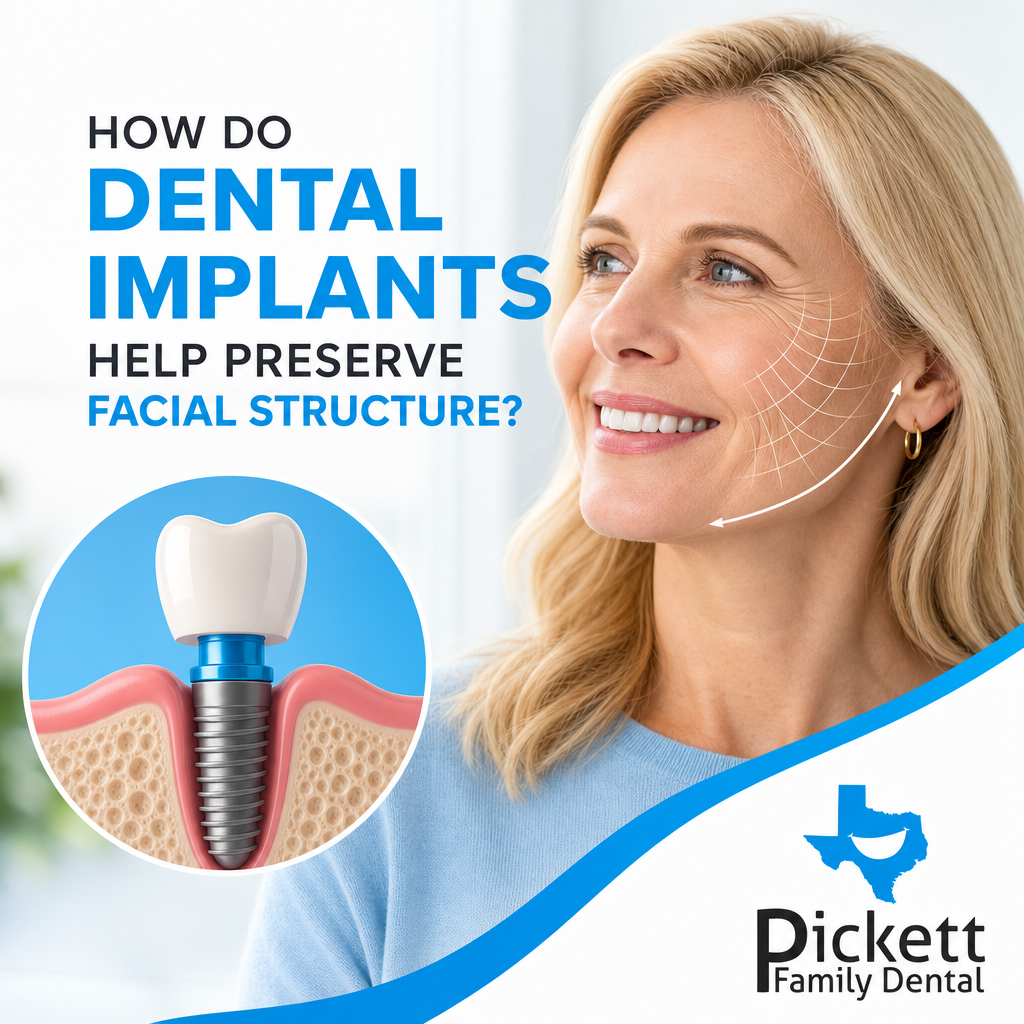
For patients with missing teeth, discoloration may be only one part of the concern. Dental implants can replace missing teeth and restore chewing ability, facial support, and smile appearance. Implant dentistry is not a whitening treatment, but it can play an important role in a complete smile reconstruction plan when tooth loss affects confidence, function, and oral health.
The Role of Dental Cleanings Before Whitening Treatment
A professional cleaning is often recommended before whitening because plaque and tartar can block whitening gel from contacting the enamel evenly. Clean teeth usually respond more consistently, and your dentist can check for cavities, gum inflammation, enamel wear, or sensitivity risks before treatment begins.
Preventative care also helps maintain whitening results. Regular exams and cleanings allow your dental team to remove surface stain, monitor gum health, and catch early signs of dental problems. Oral health is connected to overall wellness, comfort, nutrition, and quality of life, so whitening should always be planned with your full dental health in mind.
At Pickett Family Dental, preventative dentistry is not just about avoiding cavities. It is about helping families, adults, and seniors in Keller and surrounding DFW communities protect their teeth for the long term through education, early diagnosis, and personalized care.
How to Keep Your Teeth Brighter After Professional Whitening
After whitening, your teeth may be more likely to pick up stain for a short time. Your dentist will give specific instructions based on your treatment, sensitivity level, and lifestyle. Simple habits can help your results last longer and support healthier teeth.
Helpful steps include brushing twice daily with a fluoride toothpaste, flossing once daily, drinking water after coffee or tea, limiting frequent sipping of stain-causing drinks, and keeping up with regular dental cleanings. Using a straw for dark beverages may also reduce direct contact with front teeth.
If you grind your teeth, have acid reflux, or consume acidic drinks often, your enamel may wear more quickly. Addressing those issues can help preserve both your tooth color and tooth structure. Pickett Family Dental can provide guidance on nightguards, enamel protection, and preventative strategies that fit your needs.
What Patients Want to Know Before Whitening Deep Stains
Patients often care about comfort, appearance, cost, treatment time, longevity, and whether whitening will affect their dental work. These are all valid concerns. Professional whitening may cause temporary sensitivity for some patients, especially those with gum recession, enamel wear, or exposed root surfaces. A dentist-supervised plan can help reduce risk and improve comfort.
Cost depends on the type of whitening recommended and whether additional treatment is needed. If a tooth has decay, cracks, old restorations, or gum disease, those issues should usually be addressed before whitening. This protects your oral health and helps produce a more even cosmetic result.
Longevity depends on habits, enamel condition, and ongoing care. Whitening is not a one-time solution for everyone, but results can last longer with routine cleanings and smart home care. Choosing a trusted Keller family dentist also matters. Dr. Tyson Pickett, DDS FAGD, DDS, FAGD, has earned the Fellow of the Academy of General Dentistry designation, a distinction held by fewer than 6% of general dentists. That advanced training supports comprehensive treatment planning, patient comfort, and care that considers both beauty and function.
If you’re looking for Professional Teeth Whitening Near Keller, TX
If you’re looking for professional teeth whitening for deep stains, Pickett Family Dental can help you understand what is possible before you invest in treatment. Our team begins with a careful exam, listens to your concerns, and recommends options based on your enamel, gum health, existing dental work, and smile goals.
Patients from Keller, Southlake, North Richland Hills, Colleyville, Trophy Club, Roanoke, Fort Worth, and nearby DFW communities choose Pickett Family Dental for personalized family dentistry, cosmetic dentistry, restorative care, same-day crowns, dental implants, and preventative dental care. If tooth stains are affecting your confidence, schedule a consultation with Dr. Pickett and take the next step toward a healthier, brighter smile.