We help patients in Keller, TX transition from dentures to dental implants with personalized treatment plans that restore strength, stability, and confidence in their smiles.
If you’ve worn dentures for years, you may have wondered if it’s too late to switch to dental implants. Many denture wearers get frustrated with slipping, discomfort, sore spots, or difficulty eating certain foods. Over time, the jawbone naturally shrinks from lack of stimulation, which can make dentures feel loose and limit long-term comfort.
The good news? Most patients who have worn dentures for years can still qualify for dental implants. In fact, many find implants to be the most secure and life-changing upgrade they’ve ever made to their smile. If you’ve been wondering whether you can make the switch, here’s what you need to know.
Dentures vs. Dental Implants: What’s the Real Difference?
Dentures rest on the gums and rely on suction, adhesives, or clasps to stay in place. While they help restore appearance, they don’t support the jawbone. This leads to bone shrinkage over time, causing dentures to loosen and requiring frequent relining or replacement.
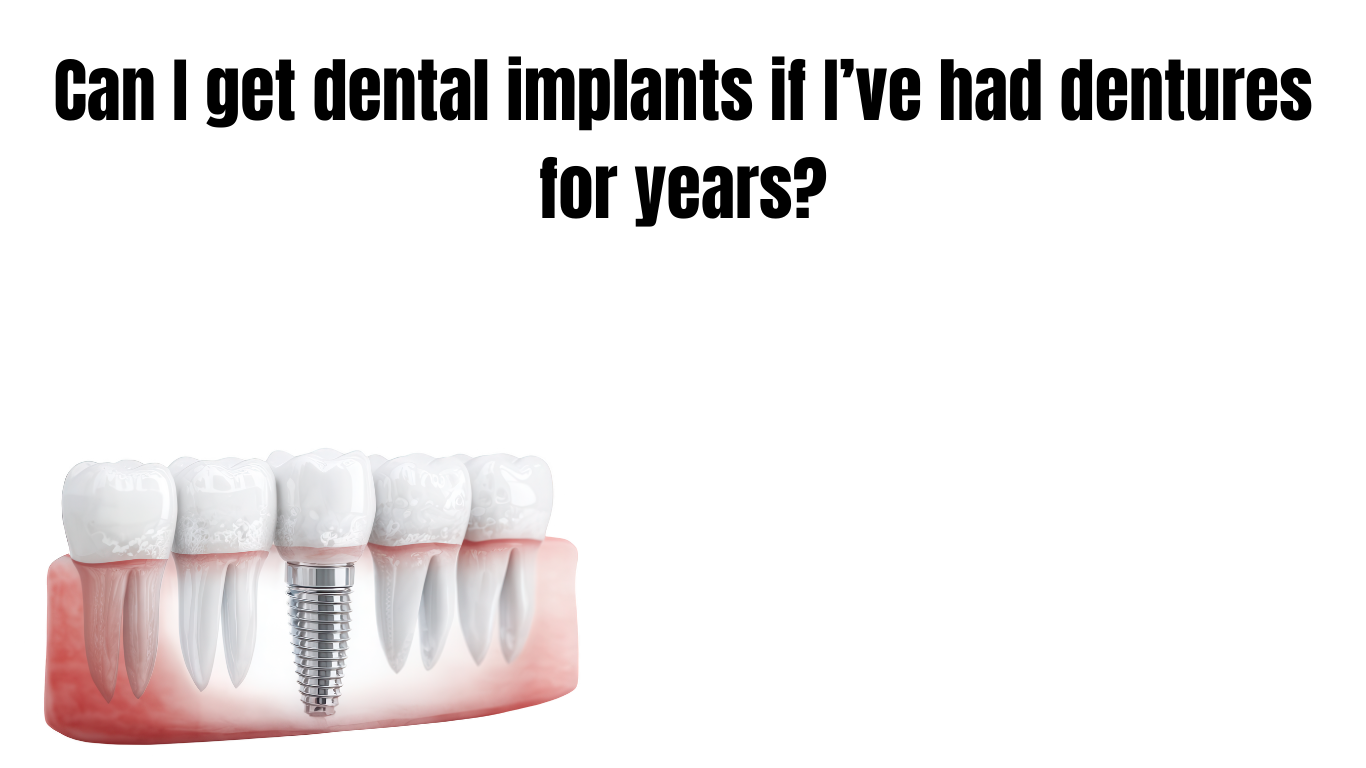
Dental implants work differently. They are small titanium posts placed into the jawbone to act as artificial tooth roots. Once healed, they fuse with the bone and support a crown, bridge, or full arch of teeth. Unlike dentures, implants stimulate the bone, preserve facial structure, and offer unmatched stability for chewing and speaking.
For long-term comfort, health, and confidence, implants often provide benefits dentures simply cannot.
Can You Still Get Implants After Years of Denture Use?
Yes—most patients can. The main factor is bone density. Because the bone naturally shrinks after tooth loss, long-term denture wearers may have less bone than those who lost teeth more recently. But that doesn’t automatically mean implants are off the table.
Today’s advanced techniques make implants possible for many people who were once told “no.” Even if you’ve worn dentures for 10, 20, or 30 years, you may still qualify. The only way to know for sure is through a thorough evaluation and digital imaging during your consultation.
What If I Don’t Have Enough Bone?
Bone loss is common—especially for long-term denture wearers—but it doesn’t mean implants are out of reach. Modern dentistry offers several solutions:
Bone Grafting
This procedure rebuilds jawbone volume so it can securely support implants. It’s safe, predictable, and widely used for patients transitioning from dentures to implants.
Sinus Lifts
For upper implants, a sinus lift can create more room and support by raising the sinus floor and adding bone.
All-on-X Implants
Full-arch implant systems like All-on-4 or All-on-6 use angled placement and strategic positioning to anchor implants where bone is naturally stronger—often eliminating the need for grafting entirely.
With these techniques, even patients with significant bone loss can often receive stable, long-lasting implants.
Why Denture Wearers Choose to Switch to Implants
Patients who switch from dentures to implants often describe the change as life-changing. Here’s what they love most:
Stronger, More Natural Chewing
Implants stay firmly in place, allowing you to enjoy foods that were difficult or impossible with dentures—including steak, apples, and crunchy vegetables.
No More Slipping or Adhesives
Once implants are secured, they don’t wiggle, click, or require sticky pastes.
Improved Speech
Dentures can shift when talking, but implants provide stable support for clear, confident speech.
Preserved Bone and Facial Structure
Implants protect the jawbone from shrinking, helping maintain a more youthful appearance.
Long-Term Value
Implants last much longer than dentures, and they reduce the need for repeated adjustments and replacements.
Better Comfort
No more sore spots, rubbing, or pressure points—just a secure, natural-feeling smile.
For many long-term denture wearers, the stability and comfort of implants are the biggest motivators to make the switch.
What Your Treatment Might Look Like
Transitioning from dentures to implants typically includes:
-
A comprehensive exam and 3D imaging to assess bone, gum health, and implant options.
-
A personalized treatment plan tailored to your goals and needs—whether that’s single implants, implant bridges, or full-arch implant-supported dentures.
-
Implant placement, completed with comfort-focused techniques and local anesthesia.
-
Healing and integration, as your implants fuse with the bone for long-term stability.
-
Final restoration, where custom teeth are attached for a secure, natural-looking smile.
For full-mouth cases, many patients receive same-day temporary teeth, so you never go without a smile during healing.
Who Makes a Good Candidate?
You may qualify for implants after years of denture use if you:
-
Are in generally good health
-
Have healthy gums or are willing to treat gum issues
-
Have enough bone—or are open to a grafting or All-on-X solution
-
Want a more stable, comfortable long-term tooth replacement
Age is not a barrier. Many of our implant patients are in their 50s, 60s, 70s, and beyond.
A More Stable, Comfortable Future for Your Smile
If you’ve worn dentures for years and are longing for a more secure, natural-feeling solution, dental implants may be exactly what you’ve been waiting for. At Pickett Family Dental in Keller, TX, we’ve helped countless patients make a successful transition—often with results they never thought were possible.
We take time to understand your goals, answer your questions, and guide you step-by-step through the process so you feel confident from start to finish. Schedule your consultation today and discover how dental implants can help you eat comfortably, speak clearly, and smile with confidence again.
Your next chapter can begin with a stronger, more grounded foundation for your smile.