Wondering what to do when your child won’t brush their teeth and how a trusted Keller family dentist can help protect their smile? Pickett Family Dental offers supportive guidance, preventative care, and comfortable dental visits for children and families.
If your child refuses to brush, you are not alone. Many parents struggle with daily brushing battles, especially with toddlers, preschoolers, and children who are sensitive to taste, texture, routine changes, or feeling rushed. The good news is that small changes at home, paired with regular family dentistry visits, can help your child build healthier habits and avoid preventable dental problems.
How to Help a Child Refusing to Brush Teeth
When a child resists brushing, the goal is to reduce conflict while keeping the routine consistent. Children often respond better when brushing feels predictable, brief, and positive. Instead of turning it into a power struggle, try giving your child simple choices: “Do you want the strawberry toothpaste or mint toothpaste?” or “Do you want to brush first, or should I help first?”
For younger children, parents should still assist with brushing because most kids do not have the coordination to clean thoroughly on their own. A good rule is to supervise until your child can tie their shoes well. Even then, a quick parent check can help make sure plaque is not being left behind along the gumline or back molars.
Common Reasons Kids Avoid Toothbrushing
Children may refuse brushing for many reasons. Some dislike the flavor of toothpaste, the feel of bristles, the sound of an electric toothbrush, or the sensation of foam in their mouth. Others push back because brushing interrupts playtime or bedtime routines. Understanding the cause can help you choose a better solution.
If your child complains that brushing hurts, take that seriously. Tender gums, a cavity, a loose tooth, mouth sore, or irritated tissue can make brushing uncomfortable. A dental exam can help identify whether the problem is behavioral, sensory-related, or connected to an oral health concern that needs treatment.
Tooth Decay Warning Signs Parents Should Watch For
When brushing is inconsistent, plaque and food particles can build up quickly. Bacteria use sugars and starches to create acids that weaken tooth enamel. Over time, this can lead to cavities, gum irritation, bad breath, and tooth sensitivity. Baby teeth matter because they help children chew, speak clearly, and hold space for adult teeth.
Parents should schedule a dental visit if they notice warning signs such as white spots, brown or dark marks, swollen gums, frequent bad breath, pain when chewing, sensitivity to cold, or a child avoiding certain foods. Early intervention is important. Small cavities are often easier to treat than advanced decay, and regular exams and dental cleanings can catch problems before they become more serious.
At-Home Brushing Tips for Kids and Toddlers
A simple routine is often the best routine. Children need brushing twice a day with fluoride toothpaste, plus flossing once teeth touch. Use a soft-bristled toothbrush that fits comfortably in your child’s mouth. For children under 3, use a smear of fluoride toothpaste about the size of a grain of rice. For children ages 3 to 6, use a pea-sized amount.
Helpful strategies include:
- Brush together so your child can copy you
- Use a two-minute song, timer, or brushing app
- Let your child choose a toothbrush with a favorite color or character
- Praise effort instead of expecting perfection
- Create a sticker chart for consistency
- Keep bedtime brushing calm and unhurried
- Avoid rinsing heavily after brushing so fluoride can keep working
If brushing remains difficult, mention it at your child’s next dental cleaning and exam. Your dental team can demonstrate techniques, recommend products, and help your child feel more comfortable with oral care.
How Preventative Dentistry Supports Better Brushing Habits
Preventative dentistry is about more than checking for cavities. At Pickett Family Dental, regular visits give children a chance to become familiar with the dental setting, ask questions, and learn oral hygiene in a friendly, age-appropriate way. Professional cleanings remove plaque and tartar that brushing may miss, while exams help identify concerns early.
These visits also help parents. Dr. Tyson Pickett, DDS FAGD, DDS, FAGD, and the team can talk through brushing struggles, diet habits, fluoride needs, thumb-sucking, pacifier use, and tooth development. The FAGD designation is earned by fewer than 6% of general dentists, reflecting Dr. Pickett’s commitment to continuing education and advanced clinical training.
When Cavities, Fillings, or Restorative Dentistry May Be Needed
If a child has a cavity, treatment depends on the size, location, symptoms, and whether the tooth is a baby tooth or permanent tooth. Small cavities may be treated with tooth-colored fillings. More advanced decay may require additional restorative care to protect the tooth and prevent discomfort or infection.
Pickett Family Dental provides restorative dentistry for patients of all ages, including fillings, crowns when appropriate, and comprehensive treatment planning. For adults in the family, services also include same-day crowns, dental implants, dentures, veneers, professional whitening, and smile reconstruction. Having one long-term dental home makes it easier for families to stay consistent with care.
Helping Kids Feel Comfortable at the Dentist
Dental anxiety can begin early, especially if a child has had a stressful experience or hears adults speak nervously about dental treatment. Parents can help by using calm, positive language. Instead of saying, “It won’t hurt,” try, “The dental team will count your teeth and help keep them clean.”
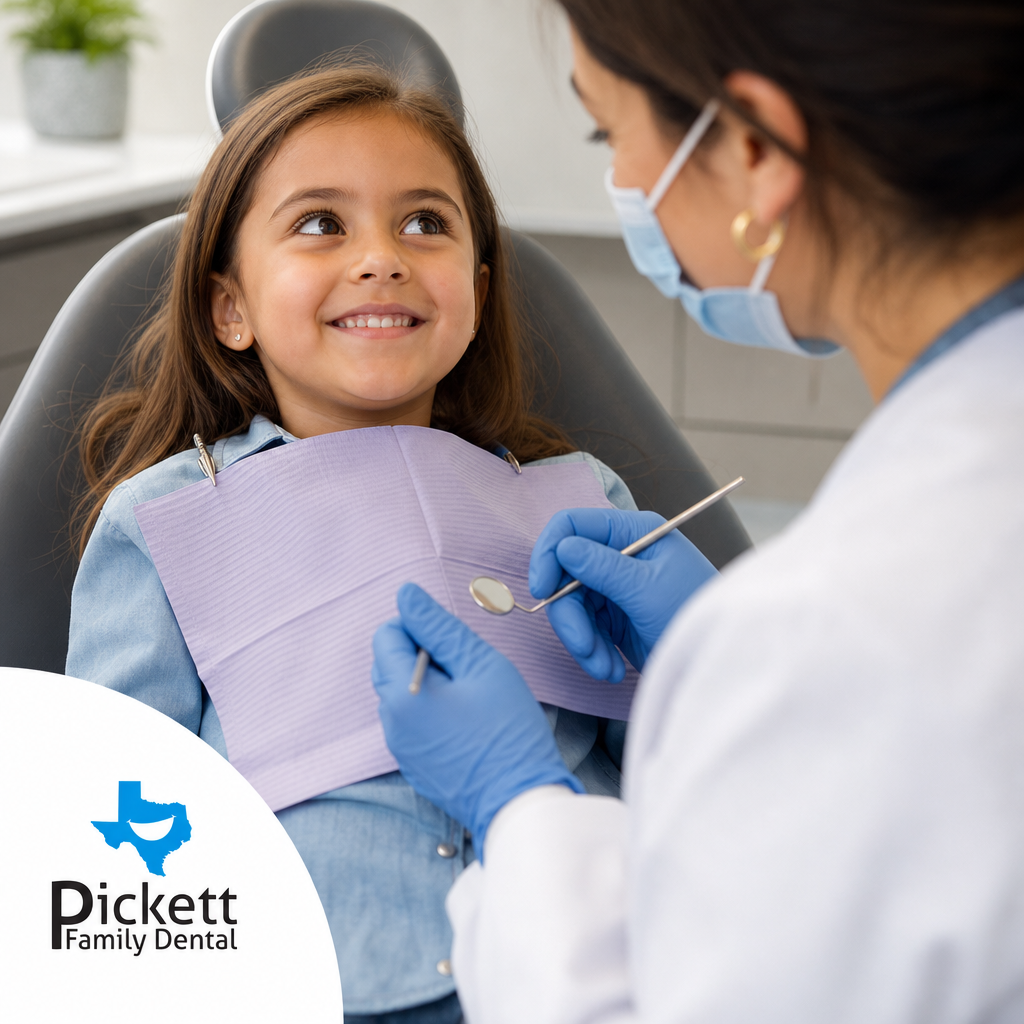
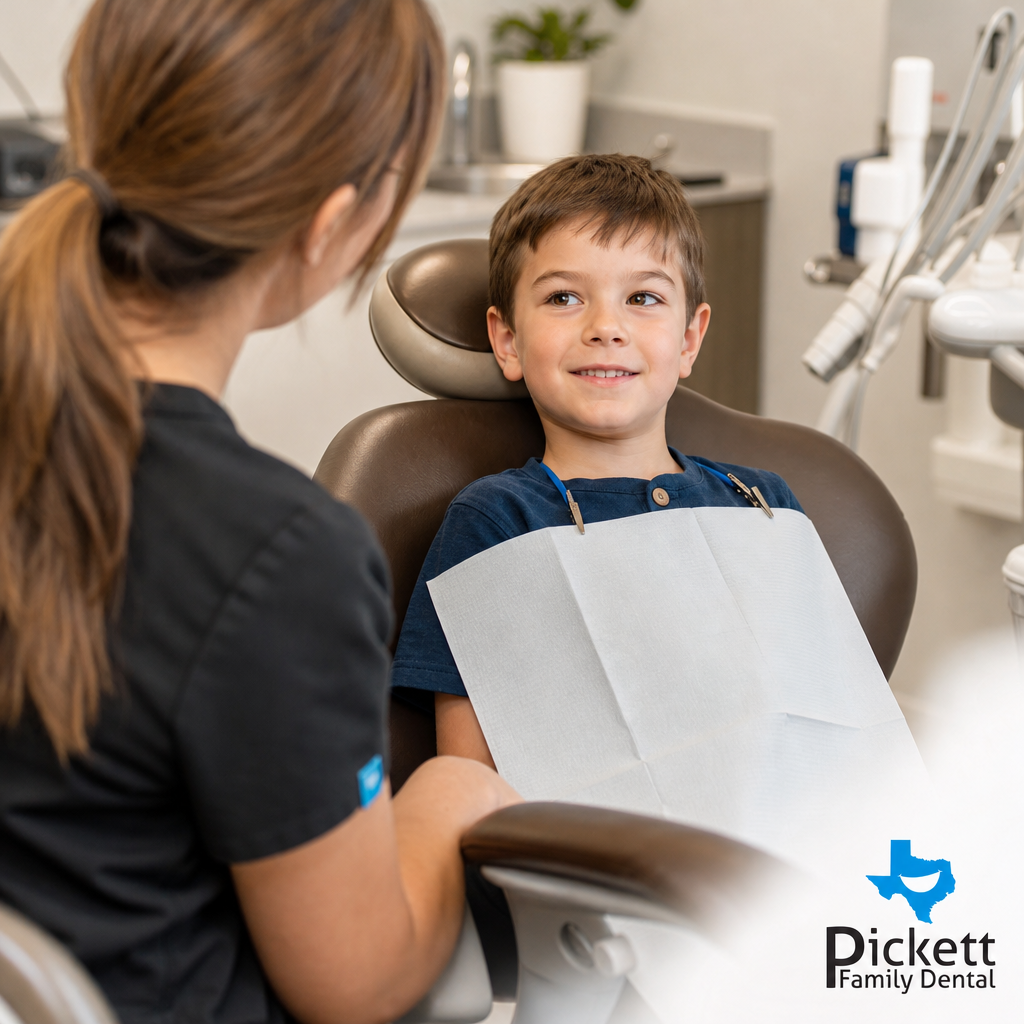
At Pickett Family Dental, comfort matters. The team takes time to explain what children can expect, uses a gentle approach, and focuses on building trust over time. For many kids, repeated positive visits make dental care feel routine rather than intimidating.
What Parents Care About: Comfort, Cost, Appearance, and Long-Term Oral Health
Parents want to know if treatment will be comfortable, how much it may cost, how long it will last, and whether it will affect their child’s confidence. These are all valid concerns. A personalized exam allows the dentist to explain options clearly, including what is urgent, what can be monitored, and how to prevent future problems.
Ignoring brushing problems can lead to cavities, toothaches, missed school, difficulty eating, and more involved treatment later. On the other hand, consistent home care and routine preventative visits support oral health, overall wellness, and quality of life. Healthy teeth help children eat comfortably, speak clearly, and smile with confidence.
Choosing the right Keller family dentist also matters. Families benefit from a practice that listens without pressure, explains treatment in plain language, and offers comprehensive care as children grow. From early cleanings to cosmetic dentistry, dental implants, and same-day crowns for adults, Pickett Family Dental is designed to support the whole family.
If you’re looking for Help When Your Child Won’t Brush Their Teeth
If you’re looking for practical support because your child won’t brush their teeth, Pickett Family Dental can help. Our team works with families in Keller, Southlake, North Richland Hills, Colleyville, Trophy Club, Roanoke, Fort Worth, and surrounding DFW communities to make dental care more comfortable and understandable.
Whether your child needs a routine cleaning, cavity evaluation, brushing coaching, or a long-term dental home, Dr. Pickett and the team provide personalized care without pressure. Schedule a visit with Pickett Family Dental to protect your child’s oral health and build habits that can support a healthier smile for years to come.