At Pickett Family Dental, we help patients determine whether they’re a strong implant candidate and what steps may be needed before treatment begins. Many people assume they aren’t eligible for dental implants because they’ve worn dentures for years, have missing teeth, or haven’t been to the dentist recently. In reality, dental implants are an option for far more patients than most people realize. Modern technology and treatment planning allow many adults to qualify for implants with the right preparation and care.
Dental implants are designed to replace missing teeth with a strong, natural-feeling solution that supports long-term oral health. Since implants are placed directly into the jawbone, several factors influence whether treatment will be successful. This article explains what dentists look for when evaluating implant candidacy and how patients can improve their chances of qualifying for treatment.
Healthy Gums and Strong Bone Support Matter
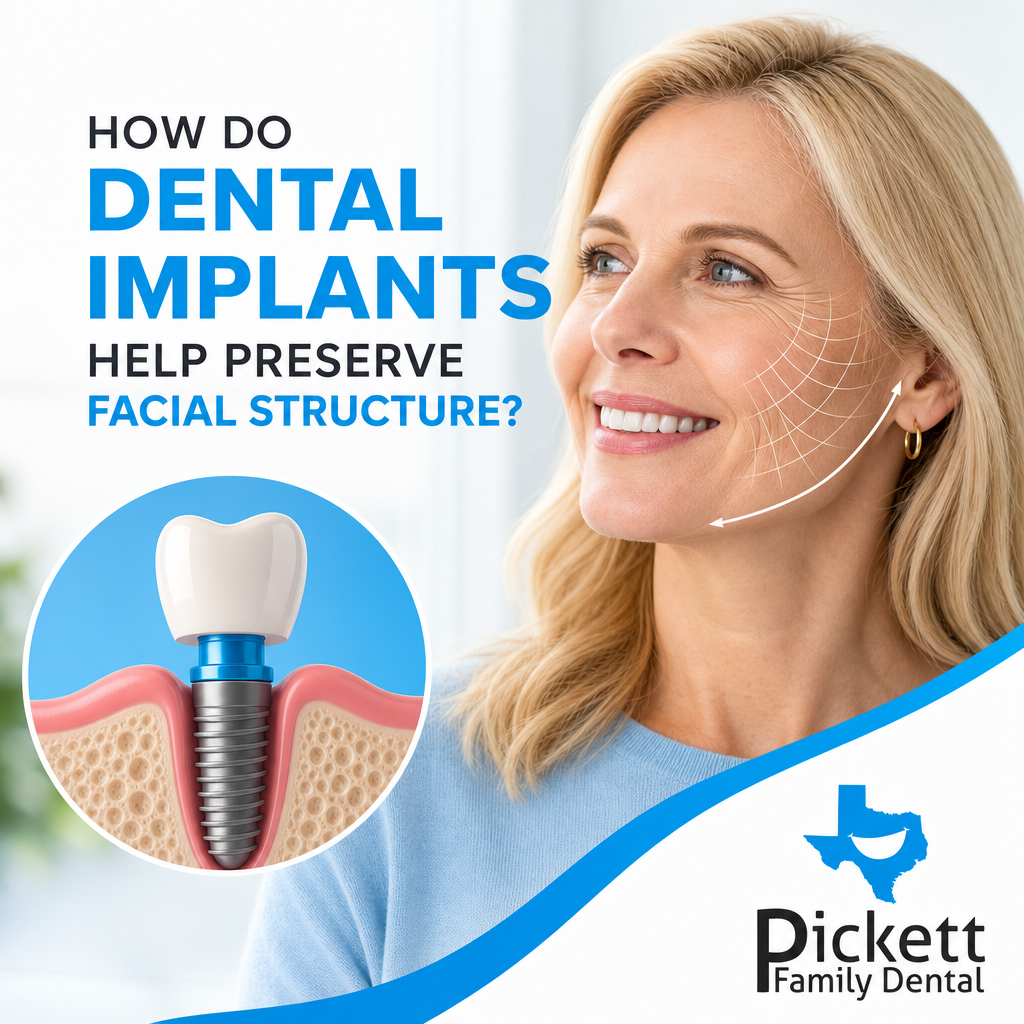
One of the most important parts of implant treatment is the condition of your gums and jawbone. Dental implants need stable bone support to hold the titanium post securely in place. During your consultation, digital imaging helps evaluate bone density and identify whether the jaw can support implants properly.
Patients who have experienced bone loss after losing teeth may still qualify for implants. Bone grafting procedures can often rebuild areas where the jaw has weakened over time. Many patients are surprised to learn they still have options even after years of missing teeth or wearing dentures.
Healthy gums are equally important because gum disease can affect implant success. If gum inflammation or infection is present, treatment may be recommended before implant placement begins. Addressing these issues early helps create a healthier foundation for long-term results.
To learn more about replacing missing teeth, our full mouth reconstruction page explains how advanced restorative treatments can rebuild function and appearance.
Your Overall Health Plays a Role
Good overall health helps support healing after implant placement. Conditions like uncontrolled diabetes, heavy smoking, or certain immune disorders can affect how the body heals and how well the implant integrates with the bone.
This doesn’t mean patients with health conditions are automatically disqualified. Many patients with controlled medical conditions successfully receive implants every year. The key is careful planning and open communication about your health history.
Smoking is one of the biggest risk factors because it reduces blood flow and slows healing in the gums. Patients who stop smoking or reduce tobacco use often improve their chances of long-term implant success significantly.
Your dentist will also review medications and medical history during your consultation to ensure treatment is planned as safely and effectively as possible.
If you’re interested in options that combine implants with larger smile restoration goals, our smile makeover page explains how cosmetic and restorative treatments work together.
For medically reviewed information about dental implant treatment, the National Institute of Dental and Craniofacial Research offers helpful educational resources.
Daily Habits and Oral Hygiene Are Important
Dental implants require the same type of long-term care as natural teeth. Patients who brush, floss, and attend regular dental visits are often stronger candidates because healthy habits help protect the gums and bone surrounding the implant.
One common misconception is that implants are maintenance-free. While implants cannot get cavities, bacteria can still affect the surrounding gum tissue if oral hygiene is neglected. This can lead to inflammation or infection around the implant over time.
Teeth grinding may also affect candidacy because excessive pressure can place stress on the implant restoration. In these situations, a custom nightguard may be recommended to protect the teeth and implants during sleep.
Patients who are willing to maintain regular cleanings and follow aftercare instructions generally experience the best long-term outcomes with implant treatment.
Age Is Usually Less Important Than People Think
Many patients assume they are either too young or too old for implants. In reality, age itself is rarely the deciding factor. Adults of many ages successfully receive implants as long as they have healthy gums and adequate bone support.
Older adults often choose implants because they want more stability than removable dentures provide. Younger adults who lose teeth due to accidents or dental problems may also benefit from implants because they help preserve the jawbone long-term.
The focus is less about age and more about overall oral health, healing ability, and long-term maintenance habits. This is why a personalized consultation is so important before deciding whether implants are the right fit.
If you’re interested in modern solutions for replacing several missing teeth, our implant bridge page explains how implant-supported restorations provide stability without relying on surrounding teeth.
What Patients Usually Want to Know About Implant Eligibility
One of the most common questions patients ask is whether implants are painful. Modern implant procedures are highly predictable, and many patients are surprised by how manageable recovery feels compared to what they expected.
Patients also want to know how long the process takes. Implant treatment varies depending on healing time and whether additional procedures like grafting are needed, but the long-term stability often makes the investment worthwhile.
Cost is another major concern. While implants involve a larger upfront investment than some alternatives, many patients appreciate the durability, comfort, and confidence they provide over time.
Most importantly, patients want reassurance that implants will feel natural. Once healed, implants allow patients to chew, speak, and smile comfortably while functioning very similarly to natural teeth.
A Helpful Next Step
If you’re looking for a long-term solution for missing teeth, finding out whether you’re a candidate for dental implants is the best place to start. At Pickett Family Dental, we evaluate your oral health carefully, explain your options clearly, and build personalized treatment plans designed around your goals. Whether you’re missing one tooth or exploring full-mouth restoration, our team is here to help you move forward with confidence. Contact us today to schedule a consultation and learn whether dental implants are right for you.