At Pickett Family Dental, we help patients understand the long-term value of dental implants and what they can expect after treatment. One of the biggest reasons patients choose implants is their durability. Unlike many other tooth replacement options, implants are designed to last for many years while providing a secure, natural feel. Understanding the average dental implant lifespan and what affects it can help you decide whether implants are the right investment for your smile.
Dental implants are often considered one of the most dependable solutions for missing teeth because they replace both the visible tooth and the root beneath the gums. This strong foundation allows implants to function much like natural teeth while supporting long-term oral health. Although no restoration lasts forever without proper care, many implants remain successful for decades.
How Long Dental Implants Typically Last
The implant post itself—the titanium piece placed into the jawbone—can often last 20 years or longer. In many cases, patients keep their implants for life when they maintain good oral hygiene and regular dental care.
The crown attached to the implant may eventually need replacement because it experiences daily wear from chewing and biting. However, the implant foundation beneath the gums is extremely durable once it fully integrates with the bone.
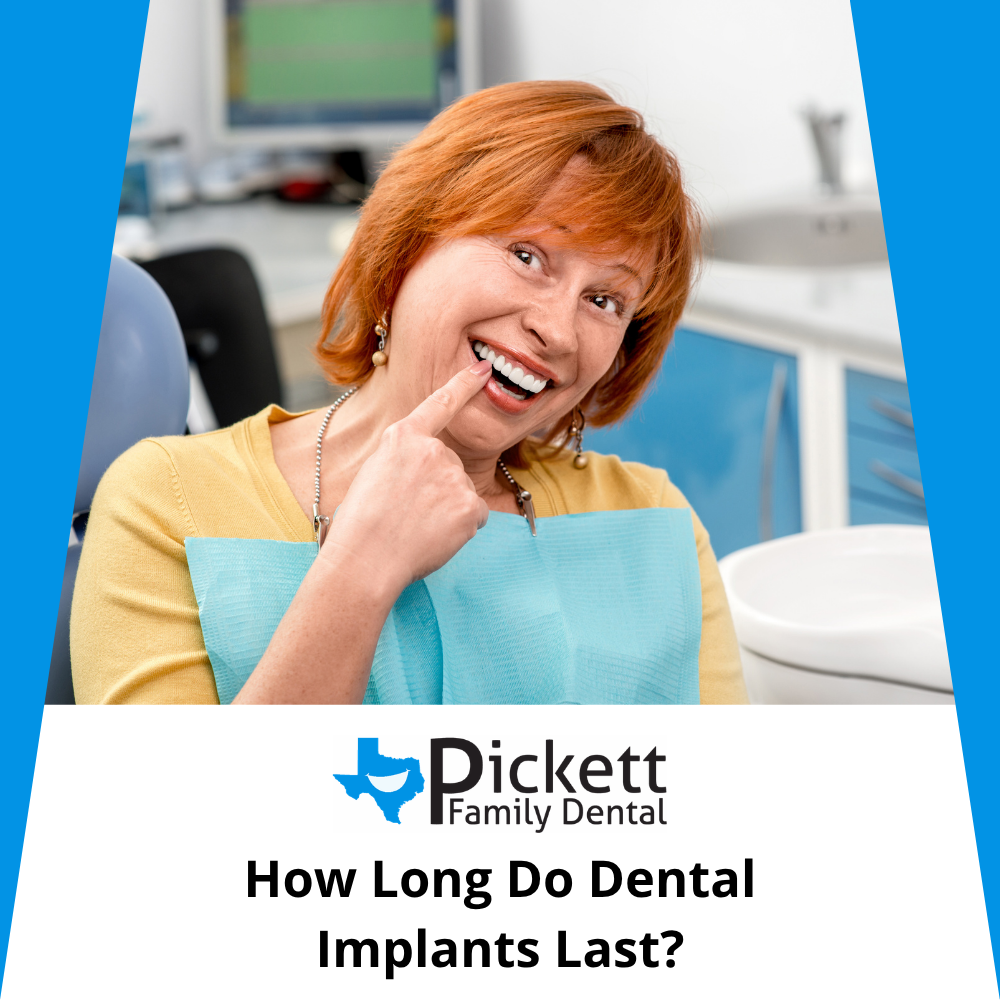
One reason implants last so long is because titanium bonds naturally with the jawbone through a process called osseointegration. This creates a stable support system that allows the implant to function similarly to a natural tooth root.
Patients who want a long-term solution often prefer implants because they don’t rely on neighboring teeth for support the way bridges do. They also help preserve the jawbone, which contributes to long-term stability.
If you’re exploring tooth replacement options, our implant-supported dentures page explains how implants can also support full-arch restorations for patients missing multiple teeth.
What Helps Dental Implants Last Longer
Good oral hygiene is one of the most important factors in implant longevity. While implants themselves cannot develop cavities, the gums and bone around them still need protection from bacteria and inflammation.
Brushing twice daily, flossing carefully around the implant, and attending regular dental checkups all help maintain healthy tissue around the implant. Gum disease remains one of the leading causes of implant complications, which is why preventive care matters so much.
Lifestyle habits also play a major role. Smoking significantly increases the risk of implant failure because it affects healing and blood flow to the gums. Patients who avoid tobacco products generally experience stronger long-term results.
Teeth grinding or clenching may also place extra stress on implants over time. In these situations, a nightguard may be recommended to protect both the implant crown and surrounding teeth from excessive pressure.
To learn more about restorative care and maintaining healthy teeth and gums, visit our preventive dentistry page.
For additional medically reviewed information about implants and oral health, the Cleveland Clinic provides helpful guidance on implant treatment and maintenance.
Why Implants Often Last Longer Than Other Options
Compared to dentures and bridges, implants typically provide greater long-term durability. Traditional dentures often require adjustments and replacement because the jawbone naturally shrinks after tooth loss. Implants help preserve the bone by stimulating it during chewing, which supports long-term oral structure.
Dental bridges also have limitations because they rely on neighboring teeth for support. Over time, those supporting teeth may weaken or require additional treatment. Implants function independently, which helps protect surrounding healthy teeth.
Patients also appreciate the stability implants provide. They don’t slip during meals or require adhesives like removable dentures. This secure fit improves comfort and confidence while reducing long-term maintenance.
Another reason implants remain popular is their natural appearance. Modern implant restorations are designed to blend closely with surrounding teeth, making them difficult to distinguish from a natural smile.
If you’re considering cosmetic improvements alongside implant treatment, our veneers page explains how smile enhancements can complement restorative care.
Signs an Implant May Need Attention
Even though implants are highly durable, regular monitoring remains important. Warning signs such as gum irritation, swelling, discomfort when chewing, or movement around the implant should never be ignored.
Patients sometimes assume implants are completely maintenance-free, but healthy gums are still necessary for long-term success. Infection around the implant, called peri-implantitis, can damage the surrounding bone if not treated early.
Regular dental visits allow your dentist to monitor the condition of the implant, evaluate the bite, and check for wear on the crown. Small adjustments made early can help prevent larger complications later.
Fortunately, implant complications are relatively uncommon when patients maintain consistent care and healthy habits.
What Patients Usually Want to Know About Implant Longevity
One of the most common questions patients ask is whether implants are worth the investment. Many patients feel they are because implants provide long-term comfort, stability, and confidence that other options may not offer.
Patients also wonder whether age affects implant success. In most cases, healthy adults of many ages can qualify for implants as long as they have adequate bone support and healthy gums.
Another common concern is whether implant surgery is difficult. Modern implant procedures are highly predictable, and many patients are surprised by how manageable recovery feels compared to what they expected.
Most importantly, patients want reassurance that implants will feel natural. Once healed, implants allow patients to eat, speak, and smile comfortably while functioning very similarly to natural teeth.
A Helpful Next Step
If you’re looking for a dependable, long-lasting solution for missing teeth, dental implants may be the right fit for your goals. At Pickett Family Dental, we help patients understand the full implant process while providing honest recommendations and personalized care. Whether you need a single implant or a more complete restoration, our team focuses on comfort, long-term results, and treatment plans designed around your needs. Contact us today to schedule a consultation and learn how dental implants can help restore your smile for years to come.